
Procurement systems for hotels, restaurants and shopping centres: Mastering multi-location purchasing
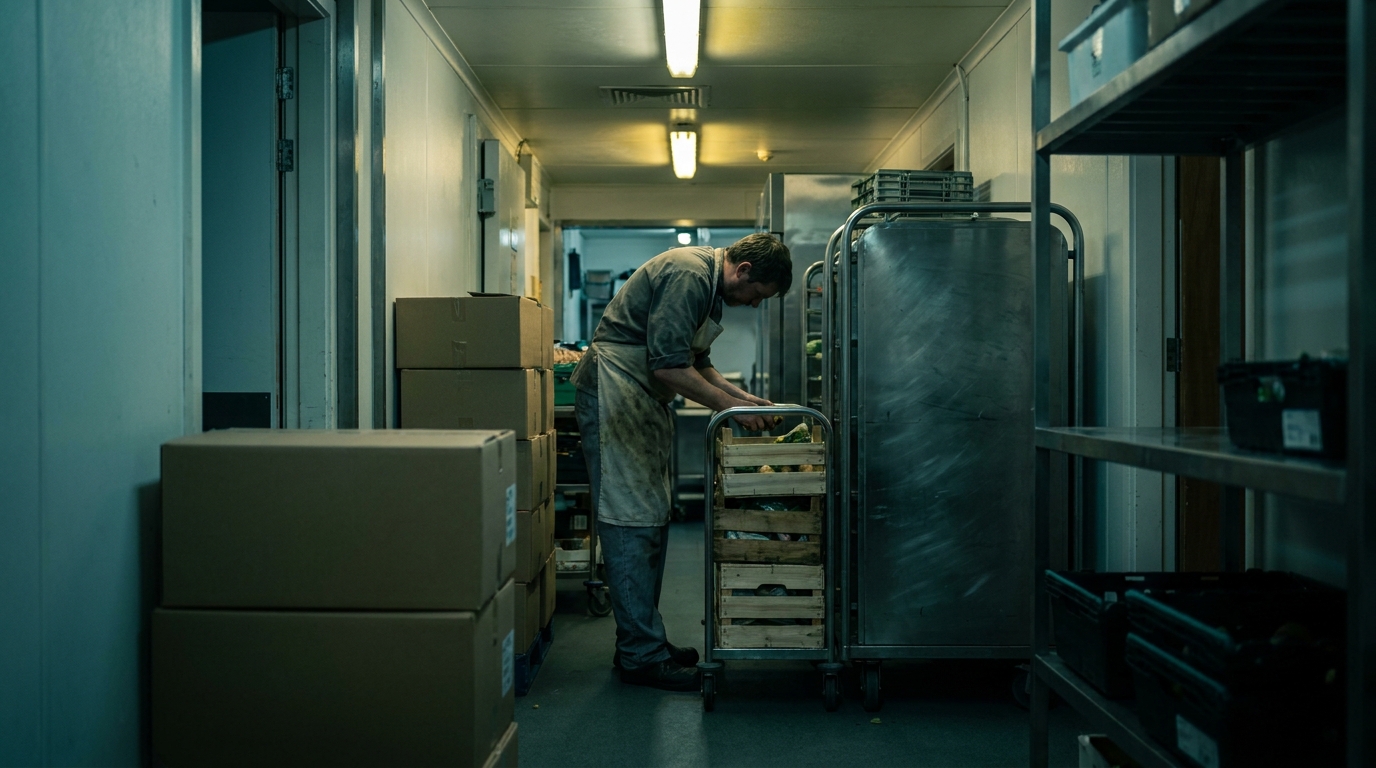
A hotel orders bed linen. A restaurant orders fresh ingredients every morning. A shopping centre manager orders cleaning supplies and maintenance services. Three very different needs — but one shared challenge: how do you keep control when purchasing happens across dozens of locations, by hundreds of employees, every single day?
The hotel, restaurant and catering (HoReCa) industry, together with shopping centres, runs highly decentralised procurement. Every location has its own needs, its own suppliers and its own ordering routines. It is a logistical and financial challenge that no traditional ERP system was designed to handle — but one that a modern procurement system solves in full.
Key takeaways
- • HoReCa and shopping centres run complex, decentralised procurement — many locations, varied needs and daily ordering
- • Orders are typically placed by operations or hotel managers without procurement experience — they need simple, mobile-friendly tools
- • Olav Thon Gruppen has consolidated the entire group — hotels, shopping centres, restaurants and real estate — onto one shared procurement platform
- • Businesses that digitise multi-location purchasing typically cut 5–15% of procurement costs while gaining full traceability
Why is procurement in HoReCa and shopping centres so challenging?
A typical Nordic hotel chain has 20–50 hotels. A restaurant chain may run 15–100 restaurants. A shopping centre has dozens of tenants, but also common areas, operations and maintenance that require ongoing purchasing. Each location is a small universe with its own conditions:
1. Many locations, varied needs
A hotel in Oslo and a hotel in Tromsø don't necessarily need the same things. A shopping centre in Bergen and one in Stavanger have different sizes, different opening hours and different maintenance needs. The procurement system must centralise control — yet allow each location to order what it genuinely needs.
2. Buyers without a procurement background
At a hotel, it's the front-office manager, housekeeper or restaurant manager who places orders. At a shopping centre, it's the operations lead or caretaker. They are experts in their own field — but they are not procurement professionals. They need a tool where the agreements are already built in, with clear rules about who can order what.
3. Daily orders with short lead times
A restaurant can't wait three days for fresh fish to be approved. A hotel needs to order soap today because guests are checking in tomorrow. The ordering rhythm is continuous, often daily, and must function without manual bottlenecks.
4. Hundreds of suppliers per chain
A hotel chain may have 100–200 active suppliers: from linens and cleaning agents to fruit, coffee, wine, maintenance services, IT equipment, flowers and office supplies. Without a central overview, it's impossible to know which suppliers have good terms — and which don't.
5. Central contracts — but local freedom
Head office negotiates favourable central framework agreements. But the moment an individual location calls a local supplier on its own, the negotiated discount slips away. This is classic maverick buying, and it is one of the biggest cost drivers in multi-location businesses.
6. Gaps between budget and spend
Each location has its own operating budget. When purchases happen outside the system — by phone, email or directly with a supplier — discrepancies only surface at month-end. By then, the money is already gone.
Why traditional solutions fail in multi-location operations
Most procurement systems are built to work in a single office with a dedicated purchasing department. When you have 30 hotels, 50 restaurants or a shopping centre with 80 tenants each with their own needs, the system collapses — or becomes so complex that no one uses it.
- Heavy ERP systems require training and expertise. A hotel manager doesn't have time to master SAP just to order soap.
- Phone and email leave no audit trail. When head office wants a spend report, someone has to manually compile hundreds of invoices.
- Excel and shared spreadsheets become impossible to maintain when 50 locations update the same file. Versions go astray and data goes stale.
- Local purchasing solutions per location give head office no consolidated view. You simply don't know what is actually being bought, or whether central agreements are honoured.
- Supplier-run portals lock you into each individual supplier and never provide a unified ordering interface for staff.
Did you know?
Studies show that multi-location businesses without centralised procurement governance lose between 3 and 8% of the procurement budget to maverick buying, price discrepancies and broken framework agreements. For a hotel chain with 500 million NOK in annual procurement, that translates to 15–40 million NOK. Read more about the hidden costs of manual procurement →
What should a procurement system for HoReCa and shopping centres deliver?
A procurement system that actually works in multi-location operations must balance central control with local flexibility. Here are the key requirements:
- ✓Central supplier catalogue: All approved suppliers with negotiated prices, available to every location
- ✓Location-specific catalogues: Each location sees only what is relevant to it — without drowning in 50,000 products
- ✓Mobile ordering: Orders must be possible from a phone — from the front desk, kitchen or caretaker's office
- ✓Per-location budget control: Each location manages its own allowance, with real-time spend visibility
- ✓Multi-tier approval flow: Small orders approved automatically; larger orders routed to operations or regional manager
- ✓Automatic invoice matching: Order, receipt and invoice reconciled automatically — for every location
- ✓Consolidated reporting: Head office sees the full picture across all locations, regions and categories
- ✓Ultra-low learning curve: A new hire should be able to place an order in under 2 minutes — with no training
Olav Thon Gruppen: One system for the entire group
Olav Thon Gruppen is one of Norway's largest privately owned operators in real estate, hospitality and retail. With Thon Hotels (over 80 hotels), Thon Eiendom (shopping centres, office and commercial property) and restaurant operations, the group needed a procurement system capable of handling complexity across all of its business areas.
"The most important thing for us was a system that is intuitive and easy to use, because we have a lot of people who will use it. Vieri also has location restrictions, which means that people ordering around the country automatically see the right selection of local goods and services."
— Jorunn Hellum, category manager for procurement, Olav Thon Gruppen
The result? Hotel and centre managers order on the agreements without having to know them. Central framework agreements that are actually followed. Real-time visibility into spend per location. And meaningful savings — in both time and money.
Read the full Olav Thon case →
How Vieri solves multi-location procurement
Vieri is built precisely for this kind of complexity. The platform combines simplicity for the end user with control for head office — without compromising either.
Simplicity for each location
A hotel manager or centre manager logs in from their phone and sees only what is relevant to their location. Central suppliers are pre-approved. Prices are pre-negotiated. The user selects product, quantity and delivery date — and is done in under two minutes. No training. No user manual.
Structured approval flow
Routine consumables below a defined threshold are approved automatically. Larger purchases or deviations from agreements route to the relevant regional or operations manager. Approvals can be granted directly from a mobile — so the fresh fish doesn't sit unapproved over the weekend.
Consolidated cross-location spend visibility
Procurement leadership at head office sees in real time what is being ordered, where and by whom. Spend reports break down by category, supplier, location or region — without anyone having to compile data manually. This is the foundation for both cost reduction and stronger negotiating positions.
Automatic invoice matching per location
When an invoice arrives — typically via EHF/PEPPOL — it is matched automatically against the order and receipt for the relevant location. The finance team no longer has to route invoices to the right hotel or centre by hand. Discrepancies are flagged; matches flow straight to payment.
Tailored budget control per unit
Every hotel, restaurant and centre gets its own budget envelope. Spend is deducted in real time — so the location always knows what is left. This delivers better cost discipline without head office having to police every single order.
What does it deliver to the bottom line?
This is what changes when multi-location procurement is digitised:
- Lower procurement cost — because more of the volume lands on framework agreements that are already negotiated
- Less time per order — from hunting through email and contract folders to ordering from a catalogue
- Fewer invoice errors — because 3-way matching catches discrepancies before payment
- Stronger supplier negotiations — because for the first time you actually know what you're buying
- Happier staff — ordering becomes a 2-minute task, not a source of frustration
Worked example: for a hotel chain with 30 hotels and NOK 200 million in spend, every percentage point of better contract compliance is worth NOK 2 million a year. How many points you can capture depends on where you start. That's money that can be reinvested in better guest experiences, maintenance or growth.
Tip
Evaluating a new procurement system? Use our checklist of 12 criteria — it is especially useful for multi-location businesses, where ease of use for the frontline and central control must be weighed against each other.
Getting started with multi-location procurement
Hotels, restaurants and shopping centres are people-intensive industries with thin margins. Every krone that leaks out through uncontrolled purchasing is a krone that could have gone to better guest experiences or more competitive rents. Operators who digitise their procurement now secure a lasting cost and control advantage.
With Vieri you can:
- Consolidate every hotel, restaurant or centre onto one shared procurement platform
- Give each location easy mobile ordering — with no training
- Ensure that central framework agreements are actually followed
- Get real-time visibility into spend across the entire organisation
- Automate invoice processing — even for complex multi-location invoicing
See how Vieri works for multi-location operations
A 30-minute demo. See how Olav Thon Gruppen consolidated the entire group onto one platform — and how you can do the same.
Book a demo →